
Fms FMS138R
Fms 1300MM PA-18 Super CUB RC Airplane
Manual de instrucciones
1. Introducción
Welcome to the world of RC aviation with your new Fms 1300MM PA-18 Super CUB. This manual provides essential information for the safe assembly, operation, and maintenance of your remote-controlled aircraft. Please read it thoroughly before your first flight to ensure a successful and enjoyable experience.
Producto terminadoview
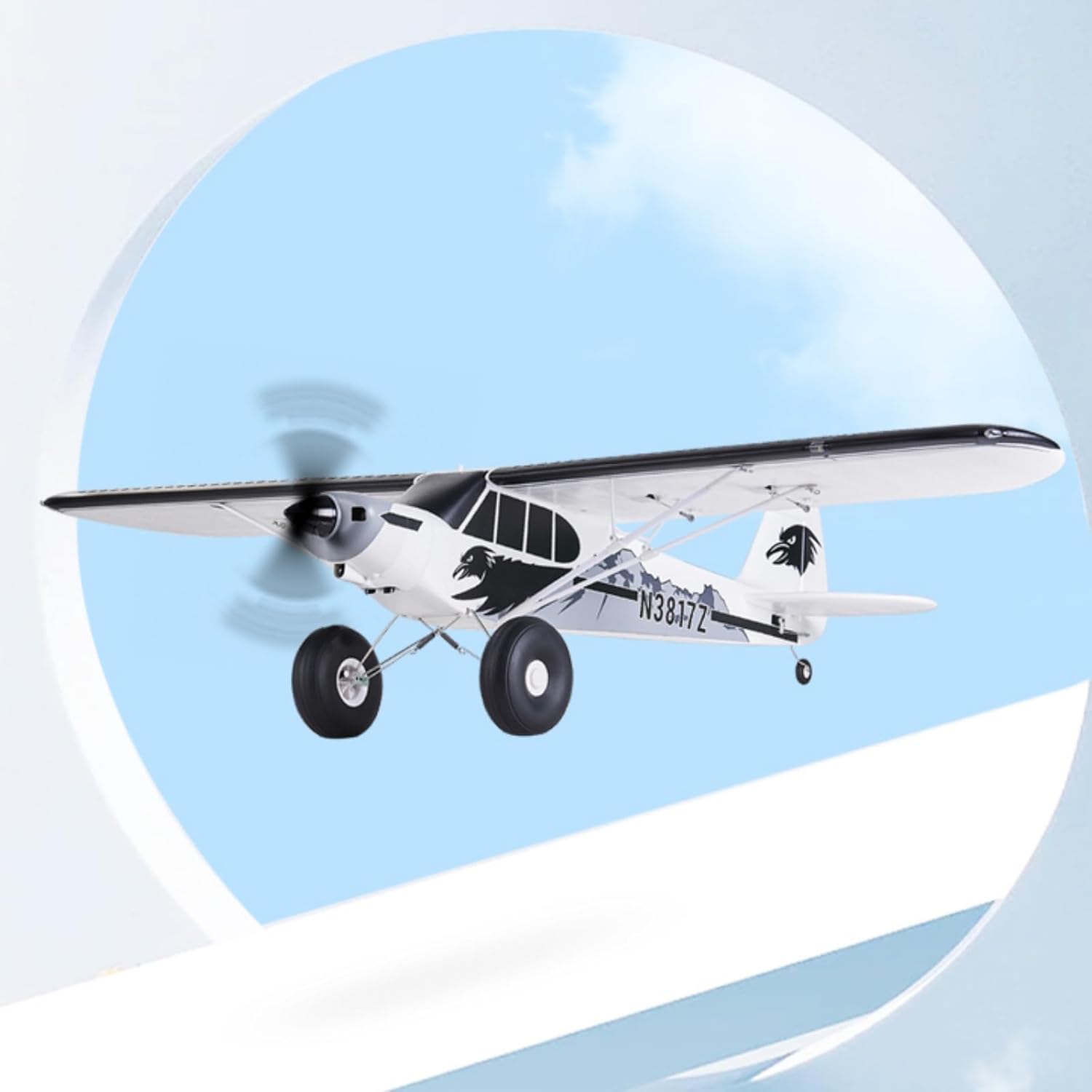
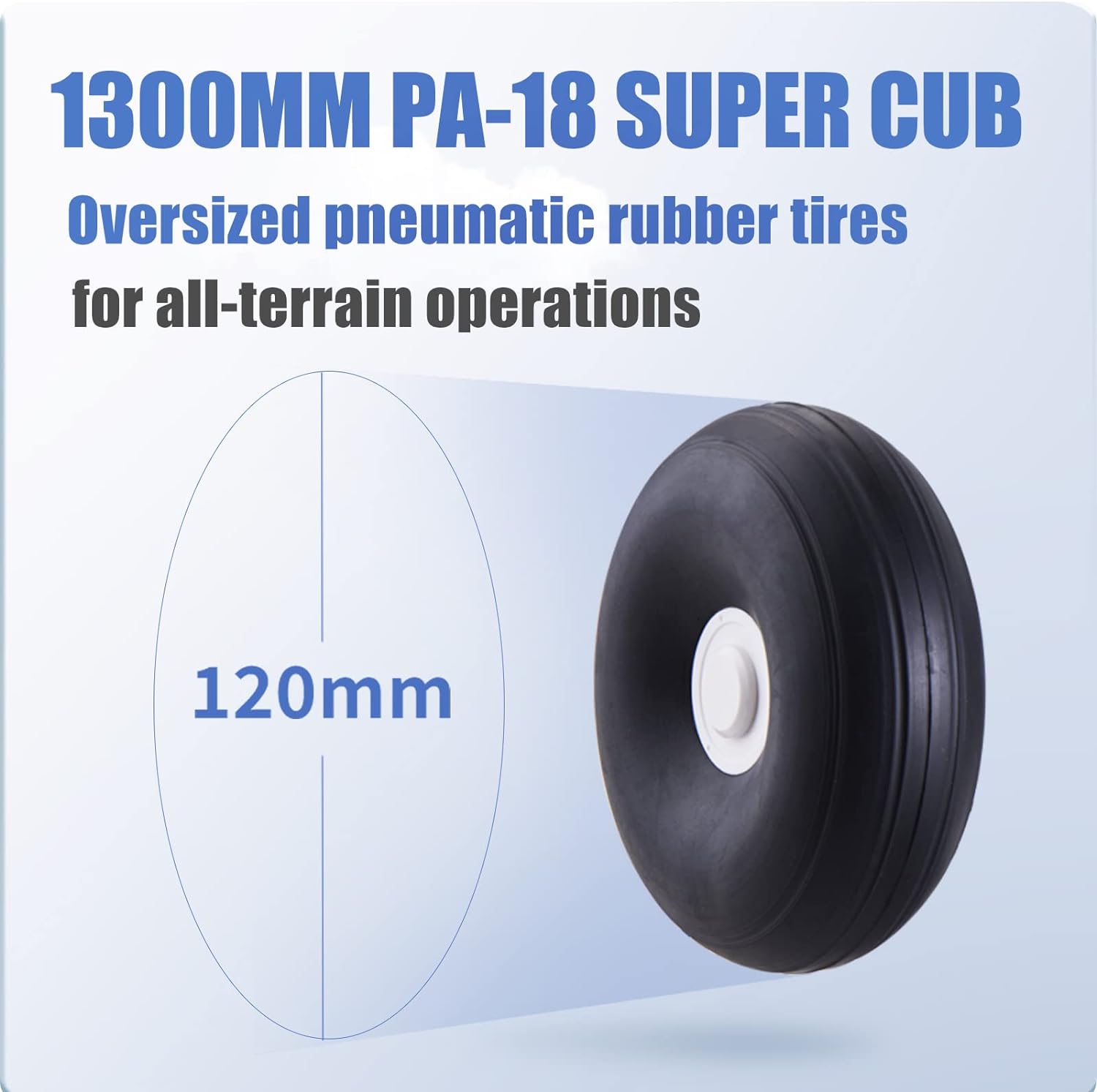
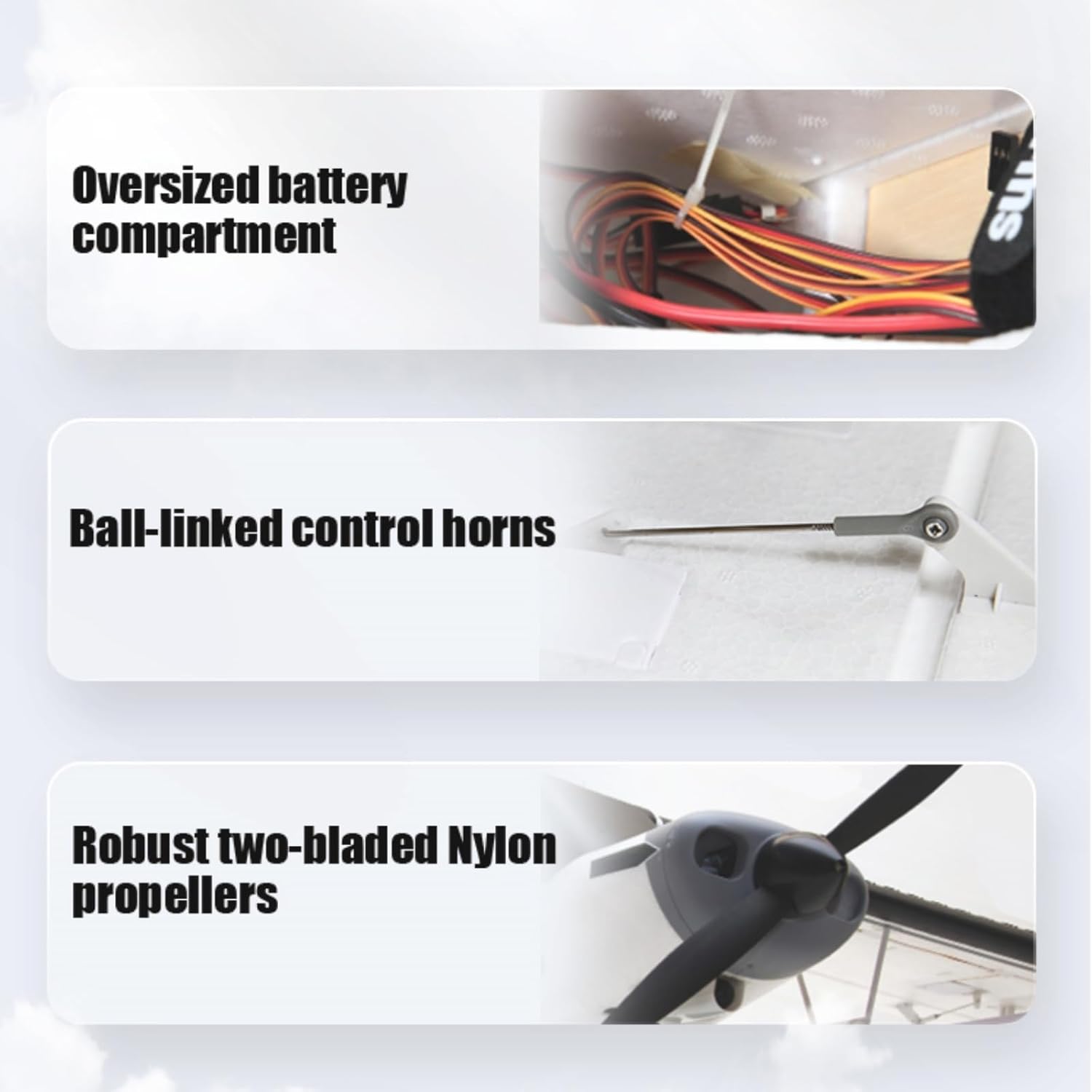
The Fms 1300MM PA-18 Super CUB is an exceptional remote-controlled aircraft designed for stability, ease of learning, and durability. It is equipped with a powerful 3536-KV850 engine and a 40A electronic speed controller, ensuring thrilling flights and exciting maneuvers. Its oversized inflatable rubber tires allow for operation on various terrains, including gravel, sand, grass, and mud. The aircraft also features functional flaps for low-speed flying and short takeoff and landing (STOL) capabilities, along with CNC metal landing gear for robust landings. This RTF (Ready to Fly) version includes a transmitter, receiver, battery, and charger, making it ready for immediate use after quick installation.





2. Información de seguridad
Operating remote-controlled aircraft requires adherence to strict safety guidelines to prevent injury or damage. Always prioritize safety during assembly, flight, and maintenance.
Precauciones generales de seguridad:
- Siempre opere su aeronave RC en áreas abiertas, lejos de personas, edificios y otros obstáculos.
- Never fly near airports or restricted airspace. Check local regulations for drone and RC aircraft operation.
- Asegúrese de que la batería esté completamente cargada e instalada de forma segura antes de cada vuelo.
- Perform pre-flight checks on all control surfaces and connections.
- No vuele con vientos fuertes o condiciones climáticas adversas.
- Mantenga las manos y la ropa suelta alejadas de la hélice cuando la batería esté conectada.
- Supervise children at all times when they are operating or near the aircraft.
- Disconnect the battery immediately after use and before performing any maintenance.
- Guarde la aeronave y las baterías en un lugar fresco y seco, lejos de la luz solar directa y de fuentes de calor.
Please follow all instructions provided in this manual and any additional safety information from the manufacturer.
3. ¿Qué hay en la caja?
Your Fms 1300MM PA-18 Super CUB RTF package includes the following components:
- Fms 1300MM PA-18 Super CUB Aircraft (pre-assembled with motor, ESC, and servos)
- Transmisor (Control remoto)
- Receptor (preinstalado)
- Batería de vuelo
- Cargador de batería
- Manual del producto (este documento)
- Hélice
- Landing Gear (pre-installed)
- Small parts and accessories (e.g., screws, linkages)
4. Configuración
4.1. Bateria cargando
Before your first flight, fully charge the included flight battery using the provided charger. Follow the charger's instructions carefully. Always charge batteries on a non-flammable surface and never leave charging batteries unattended.
4.2. Preparación del transmisor
Install the required batteries (usually AA) into your transmitter. Ensure the transmitter is powered off before proceeding.
4.3. Aircraft Assembly (Minimal for RTF)
As an RTF model, your PA-18 Super CUB comes largely pre-assembled. You may only need to attach the main wing or other minor components. Refer to any quick-start guides or diagrams included in the packaging for specific assembly steps. Ensure all connections are secure and control surfaces move freely.
4.4. Conexión del transmisor y el receptor
Your aircraft and transmitter should come pre-bound. If re-binding is necessary, consult the specific instructions for your transmitter and the Reflex V3 flight controller. Typically, this involves putting the receiver into bind mode and then activating bind mode on the transmitter.
5. Instrucciones de funcionamiento
5.1. Comprobaciones previas al vuelo
- Asegúrese de que todas las baterías (de la aeronave y del transmisor) estén completamente cargadas.
- Verify all control surfaces (ailerons, elevator, rudder, flaps) move correctly and in the right direction in response to transmitter inputs.
- Compruebe que la hélice esté bien sujeta y libre de daños.
- Inspect the landing gear for any looseness or damage.
- Confirm the flight area is clear of people, animals, and obstacles.
5.2. Despegue
Place the aircraft on a flat surface facing into the wind. Gradually increase throttle while applying slight up-elevator to lift off. The PA-18's STOL capabilities allow for short takeoffs.
5.3. Vuelo
Use the control sticks on your transmitter to maneuver the aircraft. The Reflex V3 flight controller assists with stability, making it easier to control, especially for beginners. Practice gentle turns and altitude changes before attempting more advanced maneuvers.
5.4. Aterrizaje
Approach the landing strip into the wind. Reduce throttle gradually and use the elevator to control descent rate. Deploy flaps if desired for a slower, more controlled approach. Aim for a gentle touchdown on the main landing gear, then allow the tail to settle.
6. Mantenimiento
Regular maintenance ensures the longevity and performance of your Fms PA-18 Super CUB.
6.1. Post-Flight Inspection
- Check for any damage to the airframe, wings, and tail.
- Inspect the propeller for nicks or cracks; replace if damaged.
- Ensure all control linkages are secure and free from binding.
- Check the landing gear for any bends or loose connections.
6.2. Limpieza y almacenamiento
- Limpie el avión con un paño suave y seco después de cada vuelo para eliminar la suciedad y los residuos.
- Store the aircraft in a safe place, away from direct sunlight, extreme temperatures, and moisture.
- Remove batteries from the aircraft and transmitter during long-term storage.
7. Solución de problemas
This section addresses common issues you might encounter with your Fms PA-18 Super CUB.
| Problema | Posible causa | Solución |
|---|---|---|
| La aeronave no responde al transmisor. | Transmitter or aircraft battery low; Not bound; Incorrect model memory selected. | Charge batteries; Re-bind transmitter and receiver; Select correct model memory on transmitter. |
| El motor no gira. | Throttle trim too high; ESC not armed; Motor or ESC damaged. | Lower throttle trim to minimum; Ensure throttle stick is at lowest position to arm ESC; Inspect motor/ESC for damage, replace if necessary. |
| Erratic flight or loss of control. | Loose connections; Damaged control surface; Interference; Reflex V3 settings incorrect. | Check all wiring and linkages; Inspect control surfaces for damage; Fly in an open area away from interference; Reset Reflex V3 or adjust settings. |
| Corto tiempo de vuelo. | Battery not fully charged; Battery degradation; Over-aggressive flying. | Asegúrese de que la carga esté completa; considere reemplazar las baterías viejas; vuele de manera más conservadora. |
8. Especificaciones
Key technical specifications for the Fms 1300MM PA-18 Super CUB:
| Característica | Detalle |
|---|---|
| Número de modelo | FMS138R |
| Dimensiones del producto | 27 x 14 x 8.98 pulgadas |
| Peso del artículo | 8.33 libras |
| Edad recomendada por el fabricante | 14 años y más |
| Motor | 3536-KV850 |
| Controlador de velocidad electrónico (ESC) | 40A |
| Controlador de vuelo | Reflejo V3 |

9. Garantía y soporte
Fms is committed to providing high-quality products. For any issues or support needs, please refer to the following information:
9.1. Política de devoluciones
This product is eligible for a 30-day refund/replacement return policy. Please retain all packing material and original boxes. If your package was damaged during shipping or you received the wrong product, please contact customer support immediately with photos of the damaged product/box or incorrect item.
9.2. Atención al cliente
For further assistance, technical support, or warranty claims, please visit the official Fms store or contact their customer service. You can find more information and contact details by visiting the Tienda Fms en Amazon.
Ask a question about this manual
Ask about setup, troubleshooting, compatibility, parts, safety, or missing instructions. Manuals+ will review the question and use this page’s manual context to help answer it.