1. Másview
The Guition HMI W5 ESP32-S3-N4R8 JC4827W543 is a versatile 4.3-inch IPS LCD Display Module designed for Human-Machine Interface (HMI) applications and Internet of Things (IoT) development. It features a 480x272 pixel resolution and is powered by the ESP32-S3-WROOM-1 module, which integrates a dual-core MCU with Wi-Fi and Bluetooth functionalities.
This module offers various touch panel options: NTP (Without Touch Panel), RTP (Resistive Touch Panel), and CTP (Capacitive Touch Panel). It includes an LCD display screen, backlight control circuit, and touch screen control circuit (for RTP/CTP versions). The module also reserves a TF card interface for expanded storage and provides up to 10 available IO pins for custom applications.
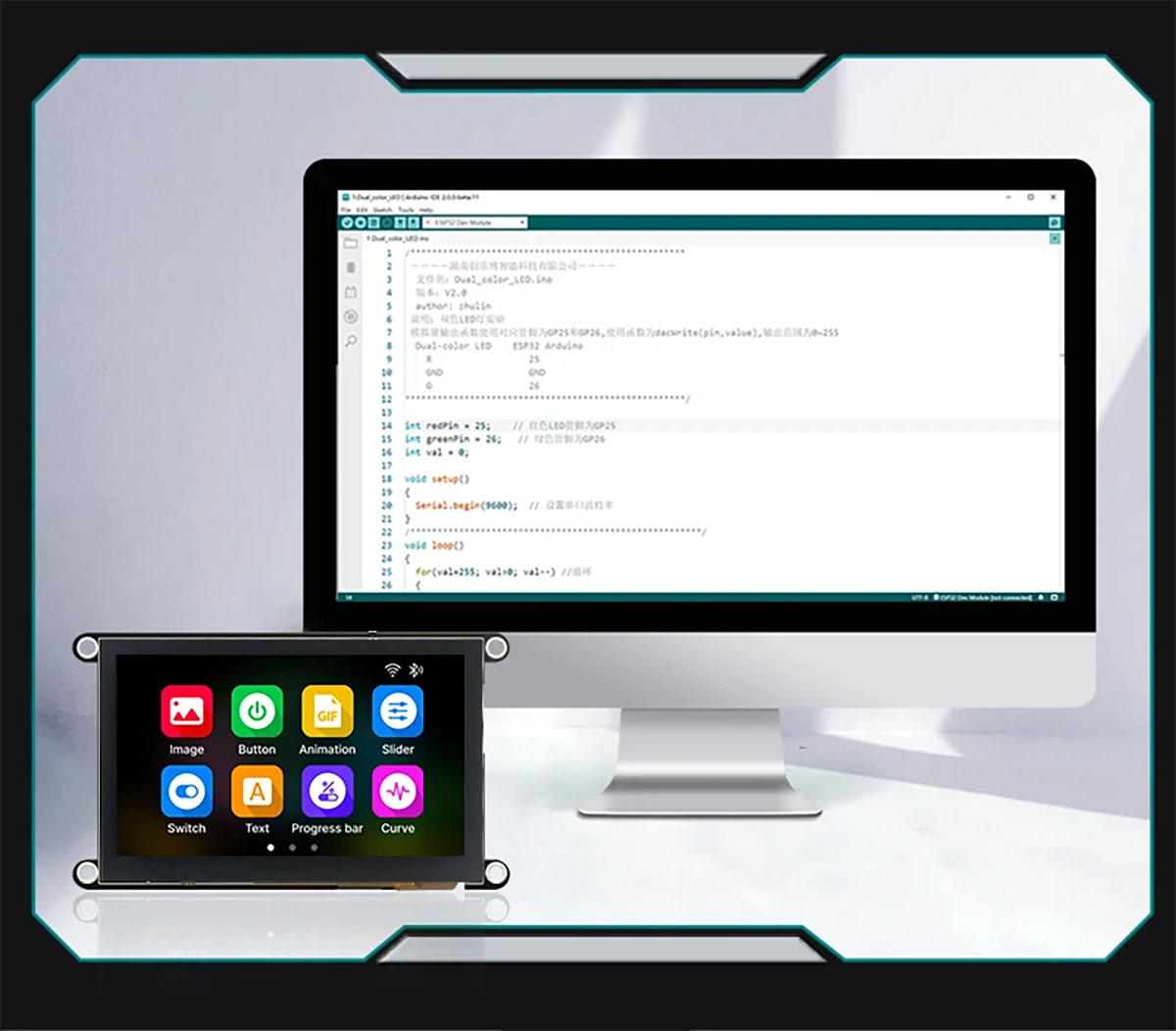
Development is supported across multiple platforms, including Arduino IDE, ESP IDE, Micropython, and the dedicated GUITION online development tools.

2. Características principales
- Mostrar: 4.3-inch color screen with 16-bit RGB 65K color display.
- Resolución: 480x272 píxeles.
- Controlador: Integrated ESP32-S3-WROOM-1 module.
- Conectividad: Built-in Wi-Fi and Bluetooth functions.
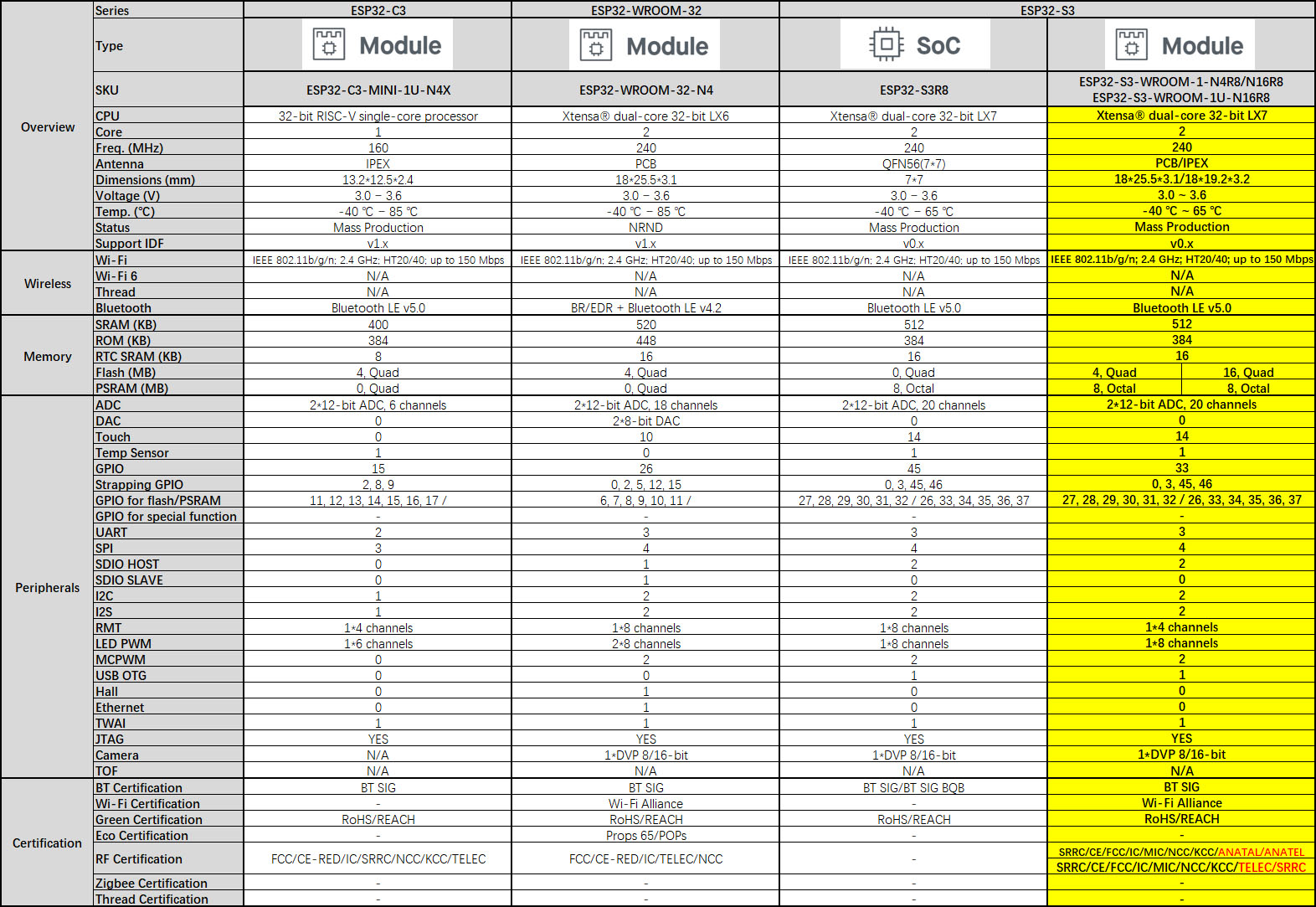
- Memoria: 512KB SRAM, 384KB ROM, 8MB PSRAM, 4MB Flash.
- Touch Options: Available in Without Touch Panel (NTP), Resistive Touch Panel (RTP), and Capacitive Touch Panel (CTP) versions.
- Expansión de almacenamiento: Equipped with a TF card slot.
- E/S: Up to 10 independent IO pins available for user applications.
- Administración de energía: Lithium battery charging and discharging circuit with overcharging and discharging protection.
- Development Support: Compatible with Arduino IDE, ESP IDE, Micropython, and GUITION online development tools.
- Programación: Supports one-click program download.
- Durabilidad: Designed with military-grade process standards for long-term stable operation.
3. Especificaciones
3.1. Parámetros del producto
| Parámetro | Valor |
|---|---|
| Color de la pantalla | RGB 65K Color |
| Código 01 | JC4827W543N (Without Touch Panel) |
| Código 02 | JC4827W543R (Resistive Touch Panel) |
| Código 03 | JC4827W543C (Capacitive Touch Panel) |
| Tamaño de la pantalla | 4.3 pulgadas |
| Tipo de pantalla | TFT IPS Full Angle |
| Controlador | ST3401A |
| Resolución | 480 * 272 (Pixel) |
| Tamaño del módulo | 120.00 mm x 70.20 mm |
| Área de visualización efectiva | 95.04 mm x 53.86 mm |
| Temperatura de funcionamiento | -20℃ ~ 70℃ |
| Temperatura de almacenamiento | -30℃ ~ 80℃ |
| Vol de funcionamientotage | 5.0 V |
| Consumo de energía | Aproximadamente 260 mA |
3.2. Controller Specifications (ESP32-S3-WROOM-1-N4R8)

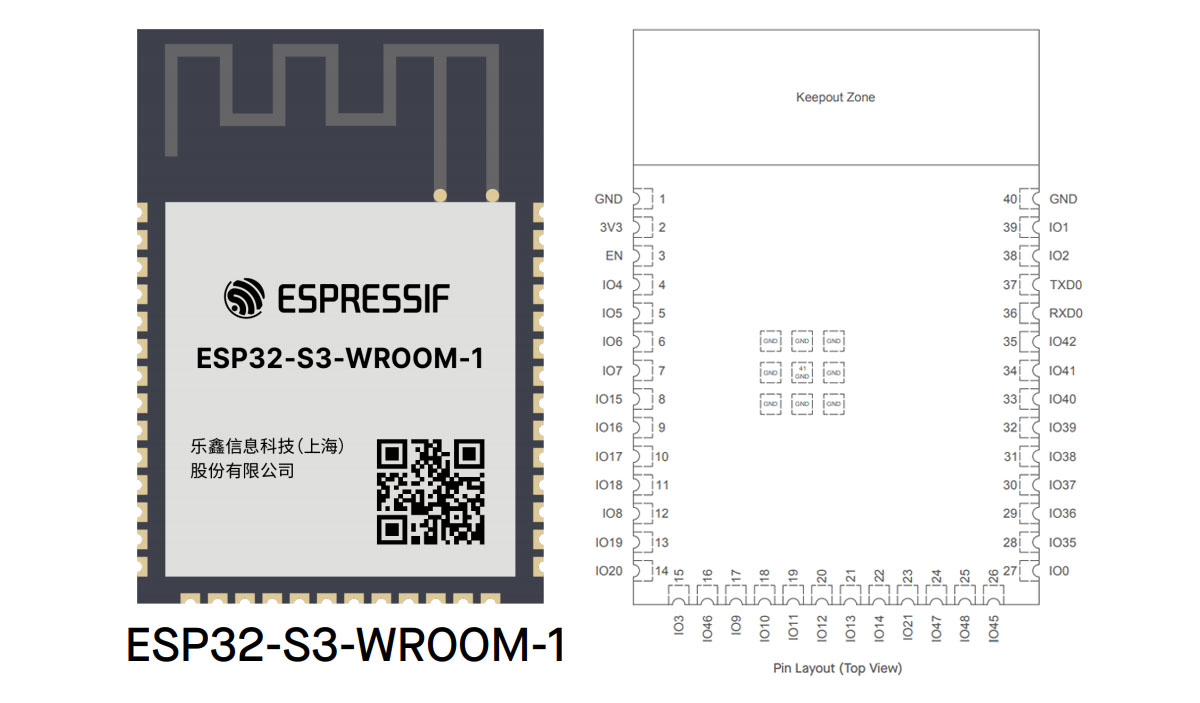
The module utilizes the ESP32-S3-WROOM-1-N4R8 controller. For detailed specifications of the ESP32-S3 series, refer to the following tables:
3.3. Dimensiones del contorno
4. Instrucciones de configuración
This section outlines the basic steps for setting up your Guition HMI W5 display module.
4.1. Identificación de componentes

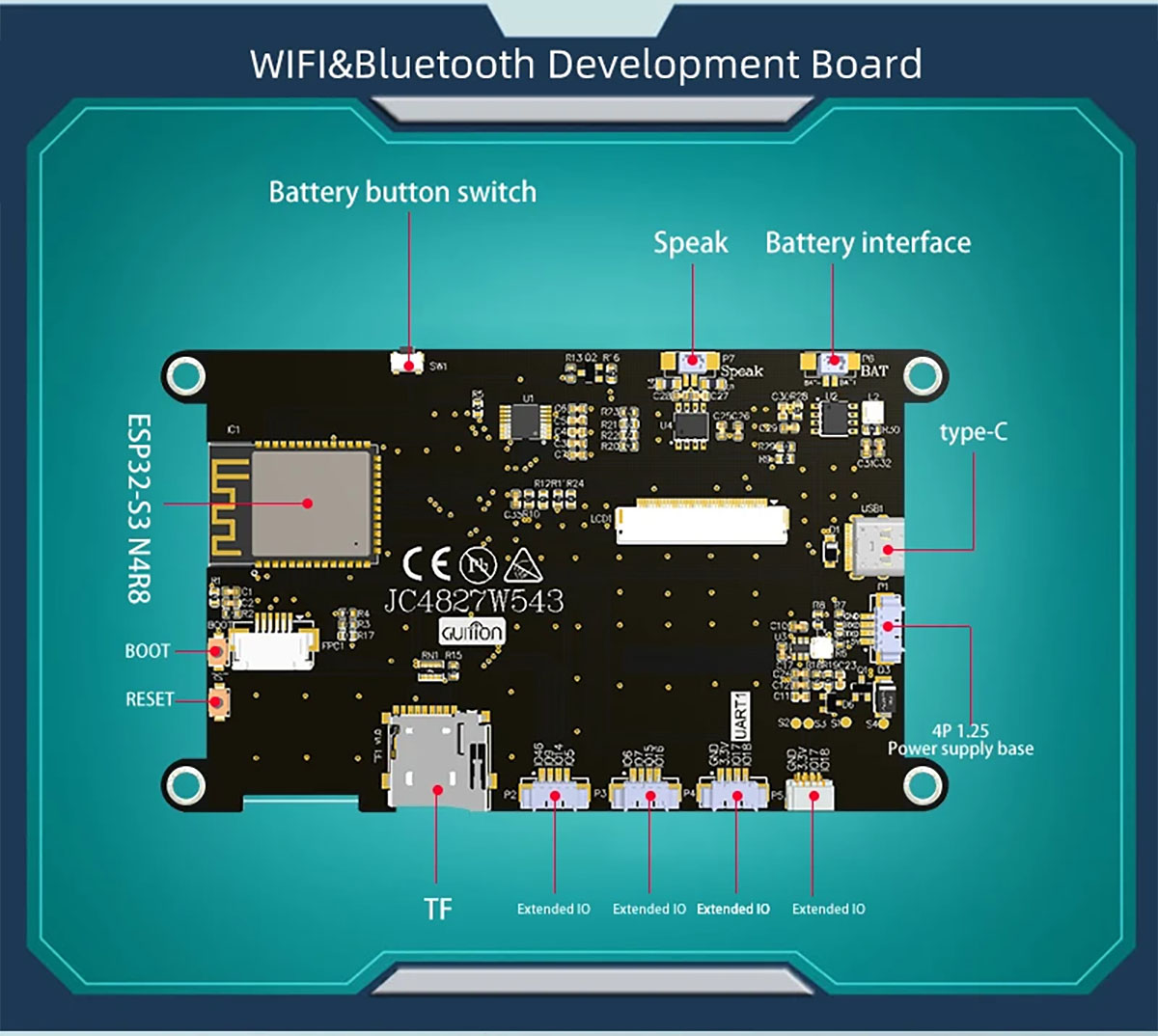
Refer to Figure 6 for the location of key components:
- Puerto Tipo-C: For power supply and data communication.
- Interfaz de la batería: For connecting an external battery.
- Battery Button Switch: To control power from the battery.
- Hablar: Salida de altavoz.
- Ranura para tarjetas TF: For inserting a MicroSD card for expanded storage.
- Extended IO: Multiple pins for connecting external sensors or peripherals.
- Botón de arranque: Used for entering bootloader mode for firmware flashing.
- Botón de reinicio: To restart the module.
4.2. Conexión inicial
- Fuente de alimentación: Connect the module to a 5.0V power source using the Type-C USB port. Alternatively, connect a compatible lithium battery to the battery interface and ensure the battery switch is in the ON position.
- Tarjeta TF (opcional): If your application requires additional storage, insert a formatted MicroSD card into the TF card slot.
- External Peripherals (Optional): Connect any required sensors or actuators to the Extended IO pins as per your project's wiring diagram.
5. Instrucciones de funcionamiento
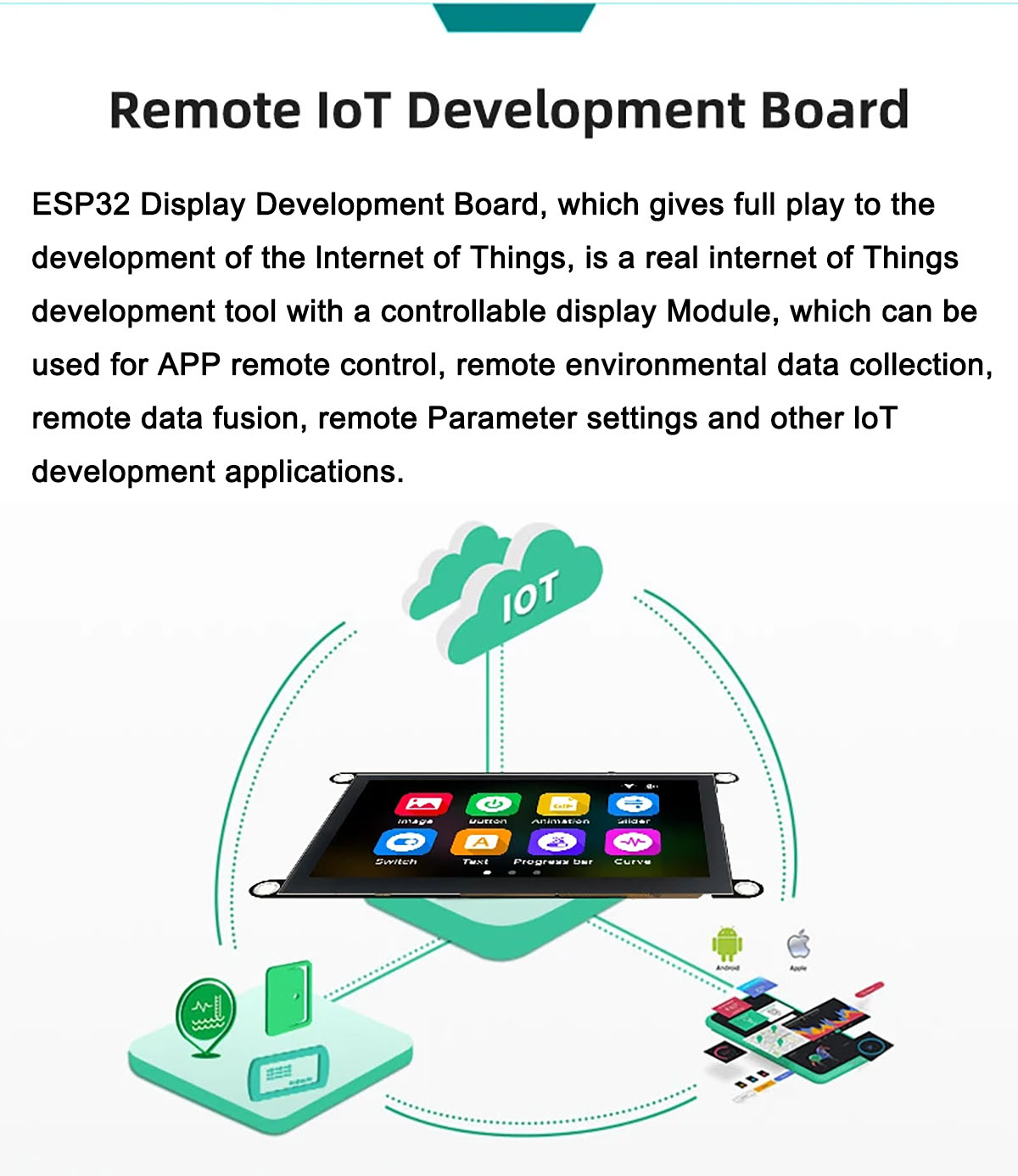
The Guition HMI W5 module is designed for various development and application scenarios, particularly in IoT and HMI projects.
5.1. Development Environments
The module supports development using several popular platforms:
- IDE de Arduino: A widely used open-source electronics platform for writing code and uploading it to the board.
- ESP IDE: Espressif's official Integrated Development Environment for ESP32 series microcontrollers.
- Micropython: A lean and efficient implementation of the Python 3 programming language optimized to run on microcontrollers.
- GUITION: An online HMI development tool specifically designed for creating user interfaces for this module. Access it at https://guition.com/.
5.2. GUITION HMI Development Tool
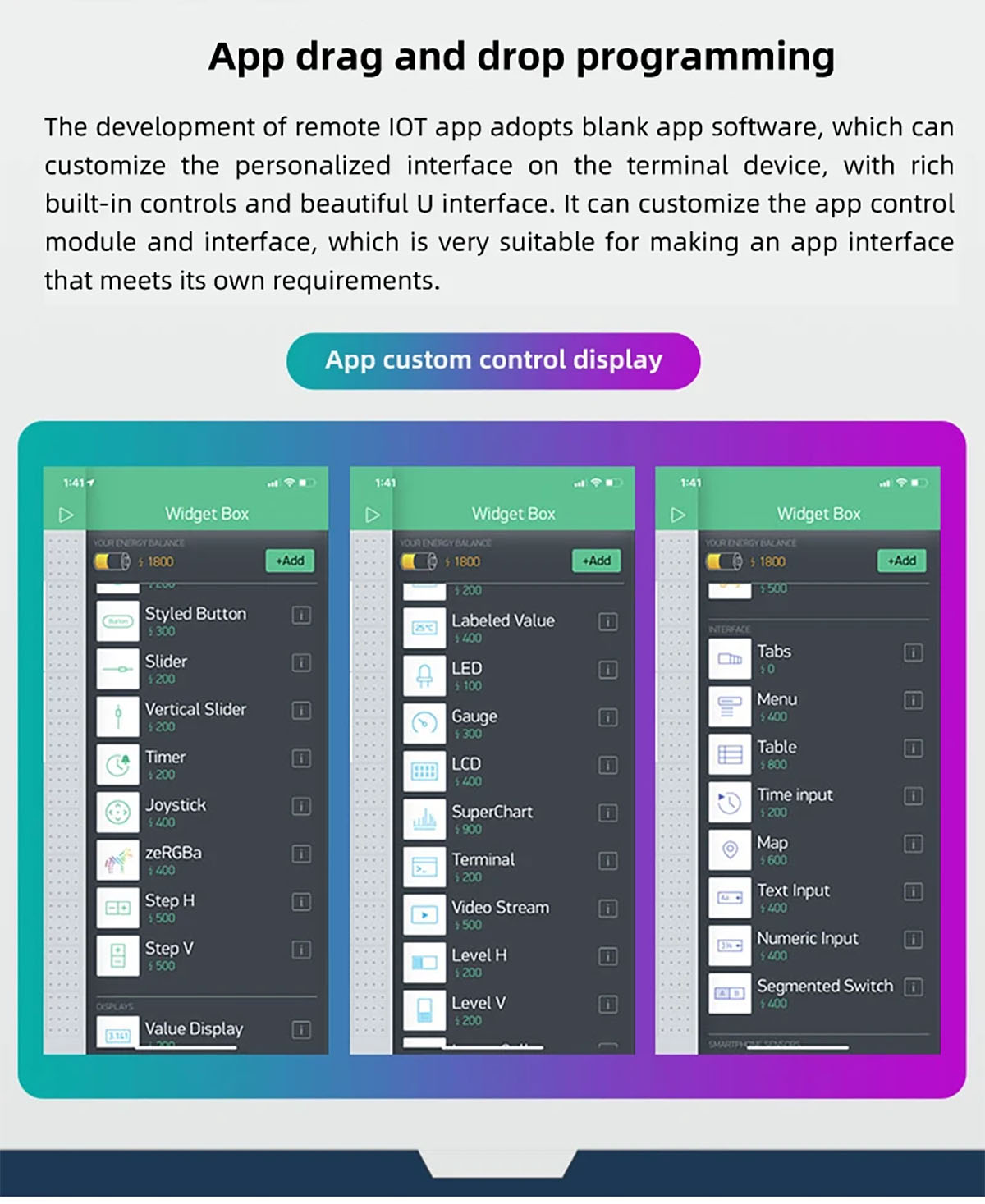
The GUITION platform offers a user-friendly interface for designing and implementing HMI applications. It supports drag-and-drop programming for creating custom control displays and interfaces.
Key features of the Guition tool include:
- 3-minute hands-on HMI design.
- Web page operations and secondary development support.
- First-line direct connection and debugging.
- Rich UI materials and advanced graphics/animation.
- Multi-language support and UTF-8 encoding.
- Remote upgrade of user engineering.
5.3. Aplicaciones
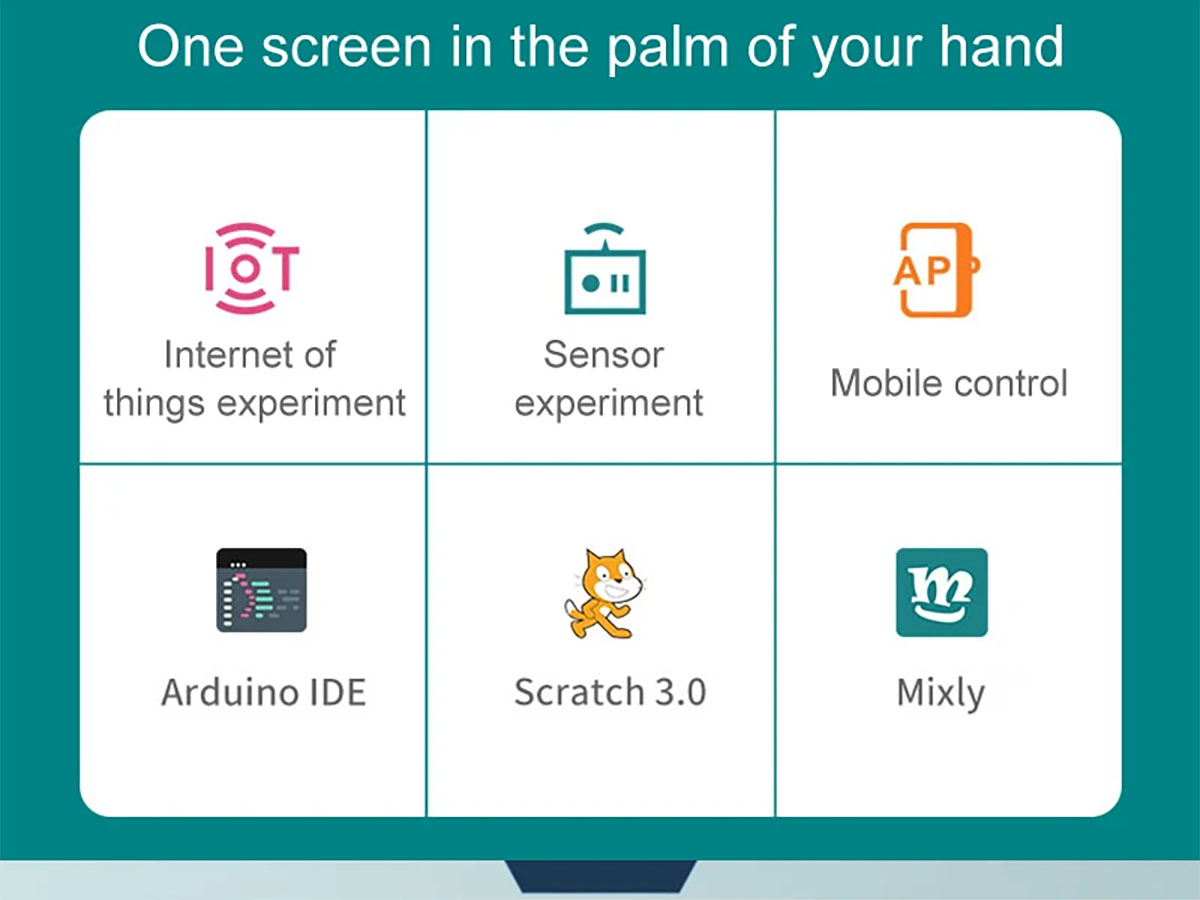
El módulo es adecuado para una amplia gama de aplicaciones, que incluyen:
- Internet of Things (IoT) experiments and development.
- Sensor data acquisition and display.
- Mobile control interfaces.
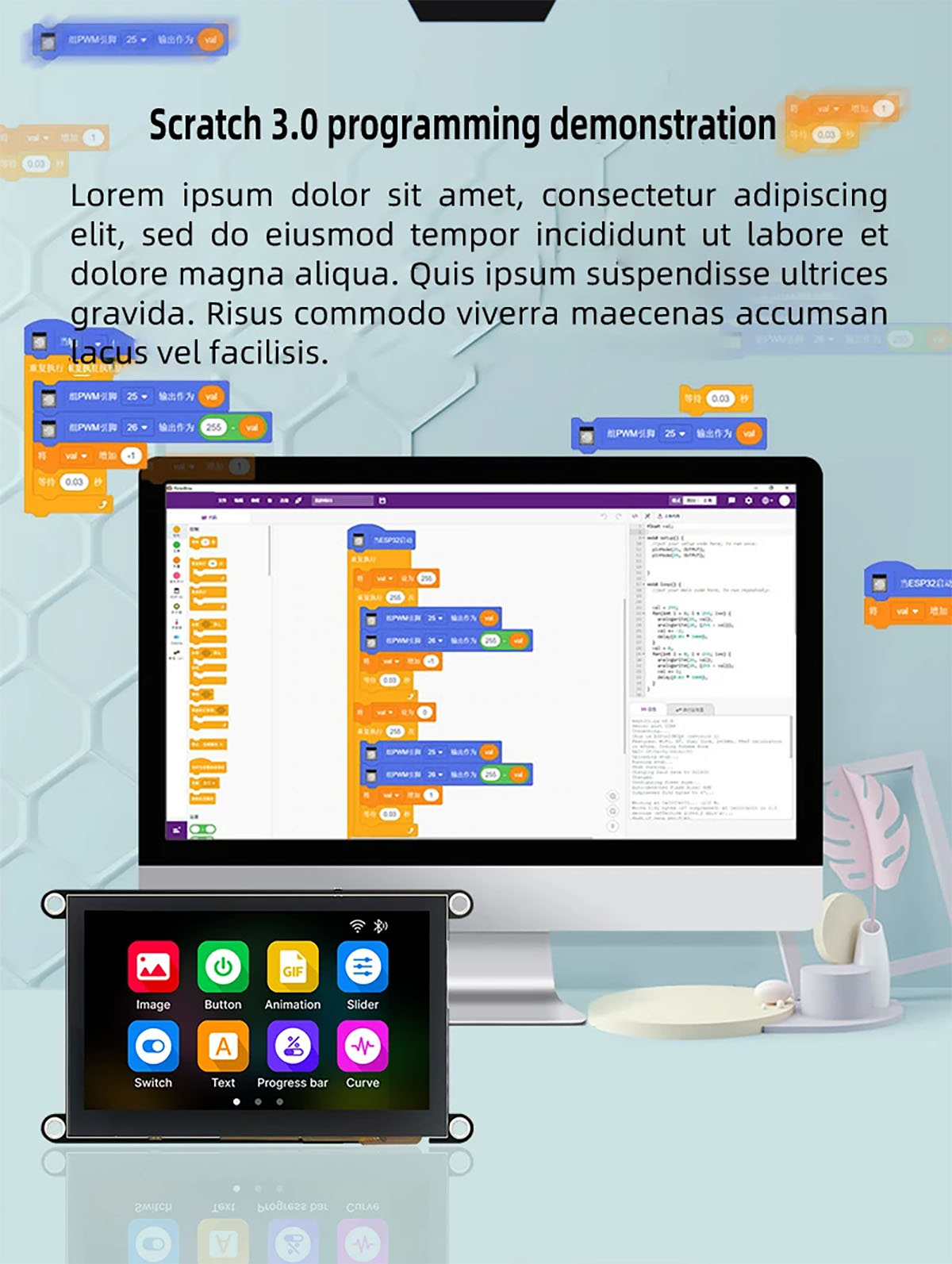
- Educational projects using Arduino IDE, Scratch 3.0, or Mixly.
6. Mantenimiento y cuidado
To ensure the longevity and optimal performance of your Guition HMI W5 display module, follow these maintenance guidelines:
- Entorno operativo: Operate the module within the specified temperature range of -20℃ to 70℃. Avoid exposure to extreme temperatures, high humidity, or corrosive environments.
- Almacenamiento: When not in use, store the module in a dry place within the storage temperature range of -30℃ to 80℃.
- Manejo: Handle the module with care to prevent physical damage. Avoid dropping or subjecting it to strong impacts.
- Limpieza: Use a soft, dry, anti-static cloth to clean the display surface. Do not use harsh chemicals or abrasive materials.
- Descarga estática: Take precautions against electrostatic discharge (ESD) when handling the module, especially when connecting or disconnecting components.
- Fuente de alimentación: Utilice siempre una fuente de alimentación estable de 5.0 V. Voltaje incorrectotagPuede dañar el módulo.
7. Solución de problemas
This section provides general guidance for common issues you might encounter with the display module.
- El módulo no se enciende:
- Ensure the Type-C USB cable is securely connected to a 5.0V power source.
- If using a battery, check that it is charged and properly connected, and the battery switch is ON.
- Pruebe con un cable USB o adaptador de corriente diferente.
- Display Not Showing Anything:
- Verifique que el módulo esté recibiendo energía.
- Ensure your code is correctly uploaded and running.
- Check for any error messages in your development environment's serial monitor.
- Touch Screen Unresponsive (RTP/CTP versions):
- Ensure the touch panel is clean and free from obstructions.
- Verify that the touch screen drivers are correctly initialized in your firmware.
- For resistive touch, ensure proper calibration if applicable.
- Problemas de conectividad Wi-Fi/Bluetooth:
- Check your network credentials (SSID, password) in your code.
- Ensure the module is within range of the Wi-Fi access point or Bluetooth device.
- Verify that the Wi-Fi/Bluetooth functions are correctly initialized and used in your firmware.
- Error en la carga del firmware:
- Ensure the correct board and port are selected in your IDE.
- Press and hold the BOOT button while pressing and releasing the RESET button to enter bootloader mode, then attempt to upload.
- Check for driver issues on your computer.
8. Consejos para el usuario
No hay consejos de usuario específicos de reviewSe proporcionaron preguntas y respuestas para este producto.
9. Garantía y soporte
This product is manufactured by Shenzhen Surenoo Technology Co., Ltd., a professional display solution supplier. For technical support and further documentation, please refer to the following resources:
- Ficha de datos: A detailed datasheet for the module is available at http://pan.jczn1688.com/s/zyojx8.
- GUITION Online Development Tools: For HMI design and development, visit https://guition.com/.
- Pantalla Surenoo Websitio: For general product information and other display solutions, visit https://www.surenoo.com/.
Please note that while basic examples for LVGL display and touch are provided, the default firmware source code is not included.


