1. Introducción
The EBYTE E30-170T20D is a high-performance wireless module based on the SI4463 chip from Silicon Labs. It operates in the 148~173.5MHz frequency band and offers transparent data transmission with TTL level output. This module is designed for applications requiring long-distance communication, robust performance, and low power consumption, featuring an air wake-up function (WOR) and Forward Error Correction (FEC) algorithm.
Its 170MHz frequency provides excellent penetration and diffraction capabilities, making it suitable for industrial and indoor environments. The module supports both SMD and DIP interfaces for flexible integration.
Características principales:
- IC: SI4463
- Frecuencia: 148 ~ 173.5MHz
- Power: 10~20dBm (100mW max)
- Distance: Up to 2.0 km (tested up to 2.5 km)
- Interface: UART (TTL level)
- Air Wake-up Function (WOR)
- Forward Error Correction (FEC) algorithm for improved reliability
- Half-duplex operation
- Supports 2.3V~5.2V power supply
- Industrial grade design (-40 ~ 85 °C)
- SMA interface for external antenna
Aplicaciones típicas:
- Meter reading systems
- Dispositivos domésticos inteligentes
- Control inalámbrico industrial
- Cerraduras inteligentes
- Smart agriculture solutions
- Temperature/humidity sensors
- Alarma de seguridad para el hogar y entrada remota sin llave
- Sistemas de seguridad con alarma inalámbrica
- Soluciones de automatización de edificios
- Productos para el cuidado de la salud
- Arquitectura avanzada de lectura de medidores (AMI)
- Aplicaciones de la industria automotriz
2. Configuración
2.1 módulo másview
The E30-170T20D module features a compact design with a metal shield covering the main IC. It includes a standard SMA connector for antenna attachment and a row of pins for power and data communication.
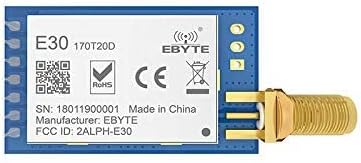
Figura 2.1: Arriba view of the EBYTE E30-170T20D wireless module, showing the EBYTE logo, model number, RoHS and CE marks, and the SMA antenna connector.
2.2 Pinout y conexiones
The module provides a set of pins for power supply and UART communication. Ensure correct voltage and data line connections to avoid damage.

Figura 2.2: Abajo view of the EBYTE E30-170T20D module, displaying the pin labels (M0, M1, RXD, TXD, AUX, VCC, GND) and an ESD sensitive device warning.
The pins typically include:
- CCV: Power supply input (2.3V to 5.2V)
- TIERRA: Suelo
- TXD: Transmitir datos (salida UART)
- RXD: Recibir datos (entrada UART)
- M0, M1: Mode selection pins
- Auxiliar: Auxiliary pin (e.g., for indicating data readiness)
2.3 conexión de antena
The module features an SMA interface for connecting an external antenna. Ensure the antenna is securely attached to maximize transmission distance and signal integrity.
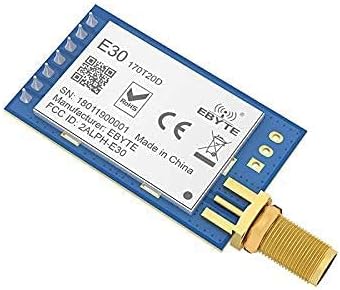
Figure 2.3: The EBYTE E30-170T20D module with an antenna connected to its SMA port, illustrating the compact form factor.
2.4 Consideraciones de instalación
For secure mounting, the module may include nuts and washers for the SMA connector. These components help in firmly attaching the module to an enclosure or panel.

Figure 2.4: Illustration of the nuts and washers provided for the EBYTE UART DIP module, designed for secure installation.
3. Instrucciones de funcionamiento
3.1 Transmisión transparente
The E30-170T20D module supports transparent transmission, meaning data sent to its UART input (RXD) will be wirelessly transmitted, and data received wirelessly will be output through its UART output (TXD). This simplifies integration as no complex protocol handling is required at the host microcontroller level for basic data transfer.
3.2 Air Wake-up Function (WOR)
The module features a WOR function, enabling ultra-low power consumption. In WOR mode, the module can periodically wake up to check for incoming data, and if no data is detected, it returns to a low-power sleep state. This is ideal for battery-powered applications where energy efficiency is critical.
3.3 Forward Error Correction (FEC)
The integrated FEC algorithm enhances the reliability and transmission range of the module. FEC proactively corrects interfered data packets, reducing data loss in environments with sudden interference. Without FEC, such packets would typically be dropped, leading to reduced data integrity and effective range.
3.4 Data Rate and Half-Duplex Operation
The module supports air data rates ranging from 1kbps to 25kbps. It operates in half-duplex mode, meaning it can either transmit or receive data at any given time, but not simultaneously. Proper communication protocols should account for this half-duplex nature to manage data flow effectively.
4. Mantenimiento
4.1 Cuidados generales
- Mantenga el módulo limpio y libre de polvo y residuos.
- Avoid exposing the module to extreme temperatures or humidity outside its specified operating range.
- Ensure proper ventilation if the module is enclosed to prevent overheating.
4.2 Precauciones de descarga electrostática (ESD)
The E30-170T20D is an ESD sensitive device. Always handle the module with appropriate ESD precautions, such as using an anti-static wrist strap and working on an ESD-safe mat, to prevent damage to internal components.
4.3 Entorno operativo
The module is designed for industrial-grade applications and can operate reliably in temperatures ranging from -40 °C to 85 °C. While robust, prolonged exposure to the extreme ends of this range or rapid temperature changes should be minimized to ensure longevity.
5. Solución de problemas
5.1 No Communication
- Verifique la fuente de alimentación: Verify that the VCC pin receives a stable voltage within the 2.3V to 5.2V range.
- Conexiones UART: Ensure TXD and RXD pins are correctly connected to your host device (TX to RX, RX to TX).
- Velocidad en baudios: Confirm that the UART baud rate and other serial parameters (data bits, parity, stop bits) match between the module and your host device.
- Modo módulo: Check the M0 and M1 pin states to ensure the module is in the correct operating mode for communication.
5.2 Poor Range or Signal Quality
- Antena: Ensure the antenna is securely connected to the SMA port and is appropriate for the 170MHz frequency band.
- Obstrucciones: Minimize physical obstructions (walls, metal objects) between the transmitting and receiving modules.
- Interferencia: Identify and mitigate potential sources of RF interference in the operating environment.
- Potencia de salida: Verify the module's power output settings. Higher power generally provides better range, but ensure compliance with local regulations.
5.3 Module Not Responding
- Reset: Intente apagar y encender nuevamente el módulo.
- Daño: Inspeccione el módulo para detectar cualquier daño físico visible.
- EDS: Consider if the module might have been exposed to electrostatic discharge without proper precautions.
6. Especificaciones
| Parámetro | Valor |
|---|---|
| IC | SI4463 |
| Rango de frecuencia | 148 ~ 173.5 MHz |
| Potencia de transmisión | 10~20dBm (100mW max) |
| Distancia de comunicación | Hasta 2.0 km (en línea recta) |
| Interfaz | UART (nivel TTL) |
| Fuente de alimentación | 2.3 V ~ 5.2 V CC |
| Temperatura de funcionamiento | -40 °C a 85 °C |
| Velocidad de datos | 1 kbps ~ 25 kbps |
| Conector de antena | AME |
| Dimensiones | Refer to datasheet for exact dimensions (DIP/SMD) |
| Cumplimiento | FCC, CE, CCC |
7. Garantía y soporte
7.1 Información del fabricante
The E30-170T20D module is manufactured by EBYTE. For detailed technical support, datasheets, and further product information, please visit the official EBYTE websitio:
7.2 Cumplimiento
The E30-170T20D strictly adheres to design standards of FCC, CE, and CCC, meeting various RF certification requirements for export. Users are advised to ensure their application of the module complies with local regulations regarding radio frequency devices.


