1. Introducción
The Phenyx Pro PDM35 is an overhead condenser microphone designed for capturing the nuanced sounds of hi-hats, percussions, and string instruments. It features a cardioid polar pattern for focused sound capture and a wide frequency response for detailed audio reproduction. This manual provides essential information for the proper setup, operation, and maintenance of your PDM35 microphone.
Contenido de la caja
Verifique que todos los artículos enumerados a continuación estén incluidos en su paquete:
- 1 x PDM35 Overhead Condenser Microphone
- 1 clip para micrófono.
- 1 x Funda de espuma para micrófono
- 1 x Bolsa para micrófono
- 1 x Manual de usuario (este documento)
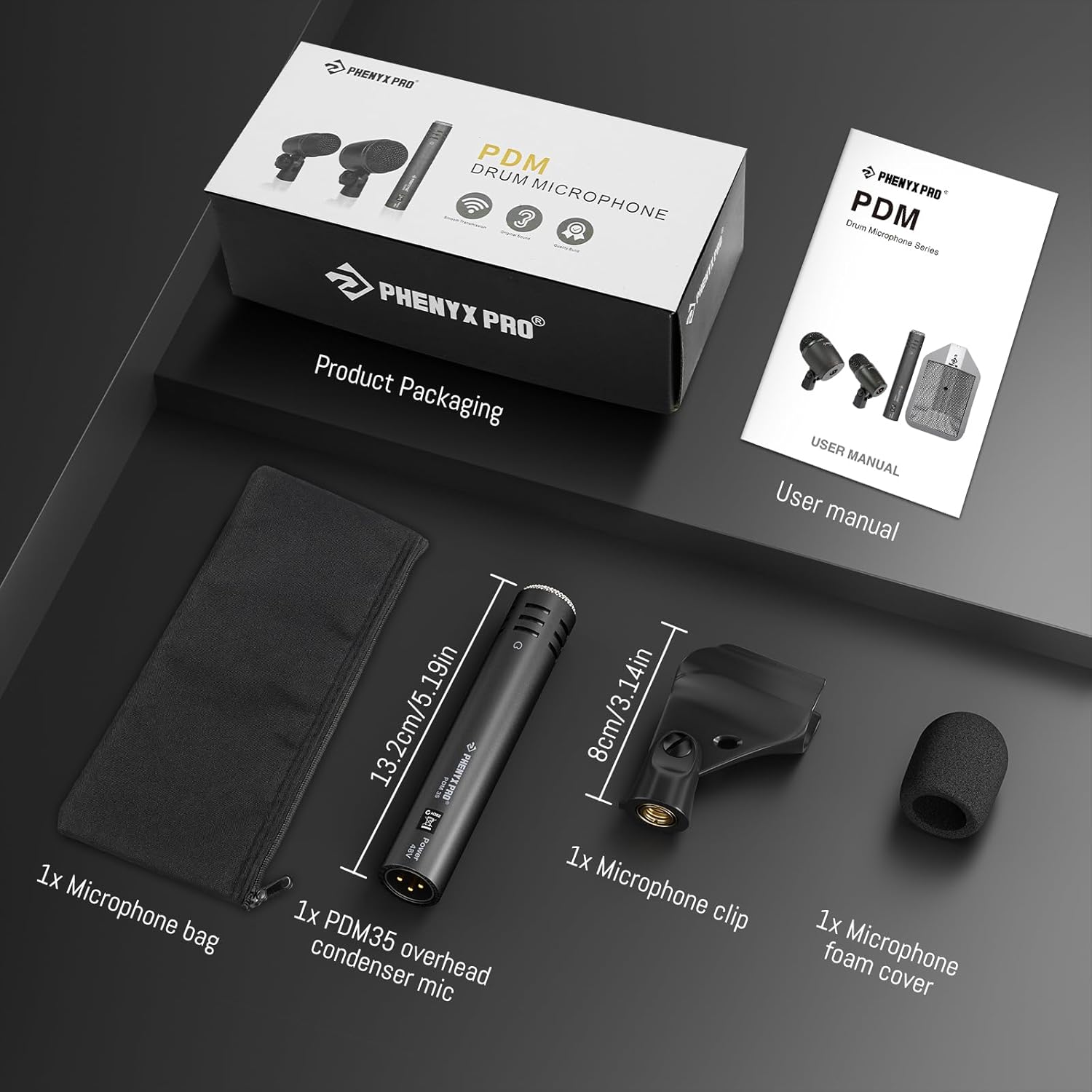
Figura 1.1: PDM35 Box Contents. This image displays the Phenyx Pro PDM35 overhead condenser microphone along with its included accessories: a microphone clip, a foam cover, a carrying bag, and the user manual, all presented next to the product's retail packaging.
2. Instrucciones de configuración
Follow these steps to properly set up your PDM35 microphone for optimal performance.
2.1 Phantom Power Requirement
The PDM35 is a condenser microphone and requires Alimentación fantasma de +48 V to operate. Ensure your mixer or audio interface provides this power. Failure to supply phantom power will result in no sound output from the microphone.

Figura 2.1: PDM35 setup on a drum kit, highlighting the need for +48V phantom power.
2.2 Montaje del micrófono
- Attach the included microphone clip to a standard microphone stand. The clip features an integrated standard thread for compatibility.
- Gently insert the PDM35 microphone into the microphone clip.
- Position the microphone as desired for your instrument. The flexible mic placement allows for effortless adjustment to capture optimal sound.

Figura 2.2: Flexible microphone placement using the adjustable mic clip.
2.3 Conexión al equipo de audio
Connect the PDM35 microphone to your mixer or audio interface using a standard XLR cable. The microphone features a gold-plated XLR connector for stable and balanced signal transmission.

Figura 2.3: Standard XLR connector for reliable signal transfer.
3. Instrucciones de funcionamiento
Understanding the PDM35's characteristics will help you achieve the best sound capture.
3.1 Patrón polar cardioide
The PDM35 features a cardioid polar pattern, which means it is most sensitive to sound coming from the front and rejects sound from the sides and rear. This is ideal for isolating specific instruments like cymbals or percussion, minimizing background noise and bleed from other sound sources.

Figura 3.1: Cardioid pattern for focused sound capture and noise rejection.
3.2 Respuesta de frecuencia
The microphone offers a wide frequency response, capturing crisp high-frequency detail and a balanced overall sound. This allows for a full-spectrum audio experience, especially beneficial for instruments with rich harmonic content.

Figura 3.2: Extended frequency response for detailed sound.
3.3 Colocación del instrumento
Position the PDM35 microphone strategically to capture the desired sound. For hi-hats and cymbals, aim the microphone towards the edge or bell depending on the desired tone. For percussion, experiment with distance and angle to capture the instrument's full character. For string instruments, placement near the soundboard or bridge can yield excellent results.

Figura 3.3: PDM35 in various recording and performance applications.
4. Mantenimiento
Proper care will extend the life and performance of your PDM35 microphone.
- Limpieza: Utilice un paño suave y seco para limpiar el cuerpo del micrófono. Evite utilizar productos químicos agresivos o materiales abrasivos.
- Almacenamiento: When not in use, store the microphone in the included microphone bag to protect it from dust and physical damage.
- Cubierta de espuma: Use the microphone foam cover to reduce plosives and protect the capsule from moisture and dust during use.
- Condiciones ambientales: Avoid exposing the microphone to extreme temperatures, high humidity, or direct sunlight.
5. Solución de problemas
If you encounter issues with your PDM35 microphone, refer to the following common problems and solutions.
5.1 No hay salida de sonido
- Comprobar alimentación fantasma: Ensure that +48V phantom power is enabled on your mixer or audio interface. The PDM35 requires phantom power to function.
- Conexión de cable: Verify that the XLR cable is securely connected to both the microphone and your audio equipment. Try a different XLR cable to rule out a faulty cable.
- Selección de entrada: Confirm that the correct input channel is selected on your mixer or interface.
- Niveles de ganancia: Check the gain (preamp) level on your mixer or interface. It might be set too low.
5.2 Poor Sound Quality / Excessive Noise
- Colocación del micrófono: Adjust the microphone's position relative to the sound source. Incorrect placement can lead to muffled or thin sound.
- Patrón polar: Remember the cardioid pattern. Ensure the microphone is pointed directly at the desired sound source and away from unwanted noise.
- Ruido Ambiental: Identify and reduce any external noise sources in the recording environment.
- Integridad del cable: A damaged XLR cable can introduce noise. Test with a known good cable.
- Sobrecarga de entrada: If the sound is distorted, the input gain might be too high. Reduce the gain on your mixer or interface.
6. Especificaciones
| Característica | Detalle |
|---|---|
| Factor de forma del micrófono | Arriba |
| Fuente de poder | Corded Electric (requires +48V Phantom Power) |
| Material | Metal |
| Relación señal a ruido | 60 dB |
| Plataforma de hardware | Boundary Microphone, Clip-On Design, Stand-Mounted |
| Número de canales | 1 |
| Respuesta de frecuencia | 20 Hz - 20000 Hz |
| Peso del artículo | 14.4 onzas (0.41 kilogramos) |
| Número de modelo del artículo | PDM35 |
| Color | Gris |
| Tecnología de conectividad | XLR |
| Tipo de conector | XLR |
| Característica especial | Condenser mic, integral stand mount, mic clip, super-cardioid pattern, wide frequency response |
| Dispositivos compatibles | Personal Computer, Tablet, Professional Audio Equipment |
| Patrón polar | Super cardioide |
7. Garantía y soporte
Phenyx Pro products are manufactured with high-quality components and precision engineering, ensuring reliability and performance. We are committed to standing behind our products.
For warranty claims, technical support, or any questions regarding your PDM35 microphone, please contact Phenyx Pro customer service. Refer to the official Phenyx Pro websitio o su documentación de compra para obtener detalles de contacto y términos de garantía específicos.


